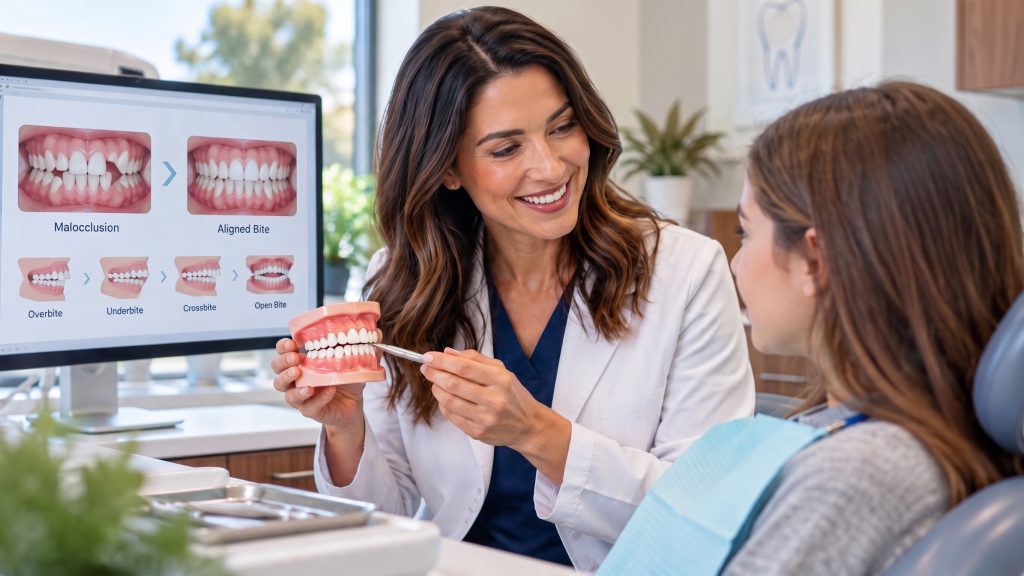
Quick Answer: Malocclusion means your upper and lower teeth do not fit together properly when you bite. Common forms include overbite, underbite, crossbite, open bite, overjet, crowding, and spacing. Mild cases may cause little or no trouble, while more noticeable problems can affect chewing, tooth wear, or oral health. Treatment depends on the type and severity of the bite problem and may include braces, clear aligners, orthodontic appliances, or surgery in some complex jaw-related cases.
What Does Malocclusion Mean?
Malocclusion is the dental term for a bite that does not line up properly. Your teeth may be crowded, crooked, or spaced unevenly, or the upper and lower jaws may not fit together as expected. Some people have a mild bite difference with few symptoms, while others may notice problems with chewing, tooth wear, or keeping crowded areas clean.
What Are the Most Common Types of Malocclusion?
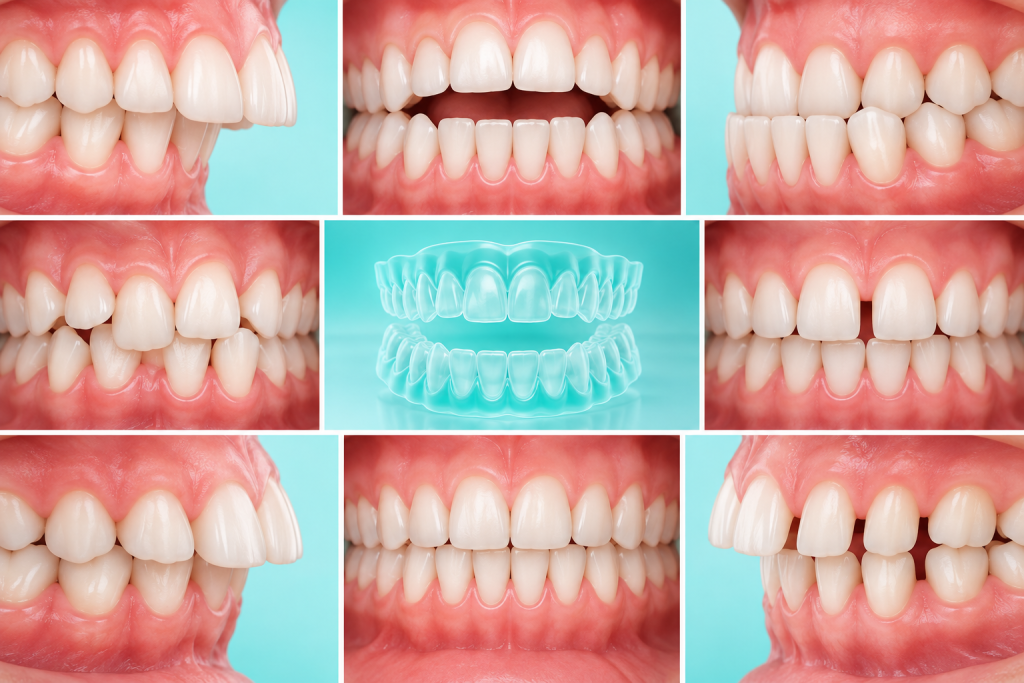
Malocclusion can affect the bite in several ways. Knowing the type helps explain which part of the bite is affected and what an orthodontist may need to evaluate.
| Type | What It Means |
|---|---|
| Overbite | The upper front teeth overlap the lower front teeth more than expected |
| Underbite | The lower front teeth sit in front of the upper front teeth |
| Crossbite | One or more upper teeth sit inside the lower teeth |
| Open bite | The upper and lower front teeth do not touch when you bite down |
| Overjet | The upper front teeth extend farther forward than the lower front teeth |
| Crowding | There is not enough room for the teeth to line up properly |
| Spacing | There are noticeable gaps between some teeth |
Miler Orthodontics also explains the difference between an overbite and underbite and covers crossbite and open bite in more detail. Both supporting URLs are included in the approved sitemap.
What Causes Malocclusion?
Malocclusion can develop because of genetics, jaw growth, or the way the teeth come in. Other factors may include missing or impacted teeth, dental injuries, prolonged thumb-sucking, or extended pacifier use. Because several factors can affect how the bite develops, not every case can be prevented.
For children, an orthodontic evaluation can help identify developing crowding, crossbites, or jaw-growth concerns. Miler Orthodontics’ early orthodontic treatment page explains when early care may be considered.
Is Malocclusion a Tooth Problem, a Jaw Problem, or Both?
Malocclusion can involve the teeth, the jaws, or both. Crowding and spacing often involve tooth position, while some overbites, underbites, and open bites may also involve how the upper and lower jaws fit together. Identifying the source of the problem helps an orthodontist decide which treatment approach may be appropriate.
What Problems Can Malocclusion Cause?
Not every malocclusion causes symptoms or needs treatment. Some bite problems can make chewing less comfortable, contribute to uneven tooth wear, or make crowded areas harder to clean. More significant cases may also affect speech or other oral functions.
A mild bite difference may only need monitoring. Treatment is more likely to be considered when the problem affects comfort, function, oral health, or how the teeth fit together.
How Is Malocclusion Diagnosed?
An orthodontist checks how your upper and lower teeth meet, the position of individual teeth, and the relationship between your jaws. Photos, digital scans, impressions, or X-rays may also be used when more detail is needed.
The exam helps identify the type and severity of the bite problem and whether treatment is necessary. Patients looking for local orthodontic information can also review Miler Orthodontics’ Beaufort orthodontic care page.
How Is Malocclusion Treated?
Treatment depends on the type and severity of the bite problem, the patient’s age, and what is causing the misalignment. Braces and clear aligners can move teeth into better positions, while some children may benefit from expanders or other orthodontic appliances when growth or jaw development is part of the problem.
More complex jaw-related cases may need additional treatment, and some adults with significant skeletal differences may require orthodontic care combined with jaw surgery. These cases are evaluated individually rather than treated with a single standard approach.
When Should You See an Orthodontist About Your Bite?
Consider an orthodontic evaluation if your teeth do not fit together comfortably, you notice significant crowding or spacing, or you have an obvious overbite, underbite, crossbite, or open bite. It may also be worth having your bite checked if chewing feels uneven, your teeth seem to wear differently, or your dentist notices an alignment problem.
You do not need to know exactly what type of malocclusion you have before scheduling an evaluation. The purpose of the exam is to identify the bite problem and determine whether monitoring or treatment may be useful.
Frequently Asked Questions About Malocclusion
Need Help With a Bite Problem?
If your teeth do not fit together comfortably or you are concerned about crowding, an overbite, underbite, crossbite, or another bite problem, Miler Orthodontics can evaluate your bite and explain which treatment options may be appropriate. Contact Miler Orthodontics to schedule an evaluation, call the Beaufort office at 843-379-9200, or call the Bluffton office at 843-815-2521.