Quick Answer: The American Association of Orthodontists recommends that children have their first orthodontic check no later than age 7. At this age, many children have a mix of baby and permanent teeth, which gives the orthodontist a chance to check tooth eruption, bite development, jaw growth, and available space. An age-7 visit does not mean your child will need braces right away. Many children only need monitoring until the timing is right.
Why Is Age 7 a Good Time for an Orthodontic Check?
Around age 7, many children have both baby and permanent teeth. This gives the orthodontist a useful early look at how the mouth is developing before all of the adult teeth are in place. The goal is not to start treatment as early as possible. It is to identify developing problems at a stage when the orthodontist can decide whether treatment is needed now or whether the child can simply be monitored.
Does Seeing an Orthodontist at Age 7 Mean Your Child Needs Braces?
No. An early orthodontic evaluation is not the same as starting treatment. Many children are checked at age 7 and are simply observed as they grow. For example, if the bite looks healthy and the permanent teeth are coming in normally, the orthodontist may recommend waiting instead of starting braces. Parents who want more information about care for younger patients can also review children’s orthodontics.
What Does an Orthodontist Check at Age 7?

An orthodontist looks at more than whether the front teeth appear straight. The evaluation may include how the upper and lower teeth meet, whether there is enough room for permanent teeth, how the jaws are growing, and whether teeth are coming in where expected. For example, one child may have straight-looking front teeth but a crossbite in the back, while another may have crowded teeth that suggest limited room for permanent teeth. These are the kinds of developing issues an early visit can help identify.
What Problems May Be Easier to Address While a Child Is Growing?
Certain orthodontic problems may be easier to manage while the jaws and teeth are still developing. Examples can include some crossbites, a narrow upper jaw, severe space problems, or certain jaw-growth differences. Early treatment is not needed for every child with one of these concerns, but an orthodontist can decide whether waiting is reasonable or whether treatment during growth may be useful. If treatment is recommended, the early orthodontic treatment page explains more about care that may begin before all permanent teeth have erupted.
What Happens If No Treatment Is Needed at Age 7?
Sometimes the best recommendation is simply to wait. The orthodontist may monitor how permanent teeth come in, how the bite changes, and how the jaws continue to grow. This can help determine a better time to begin treatment if braces or another appliance becomes necessary later. An early visit can still be useful even when no treatment is started.
When Is Early Orthodontic Treatment Actually Needed?
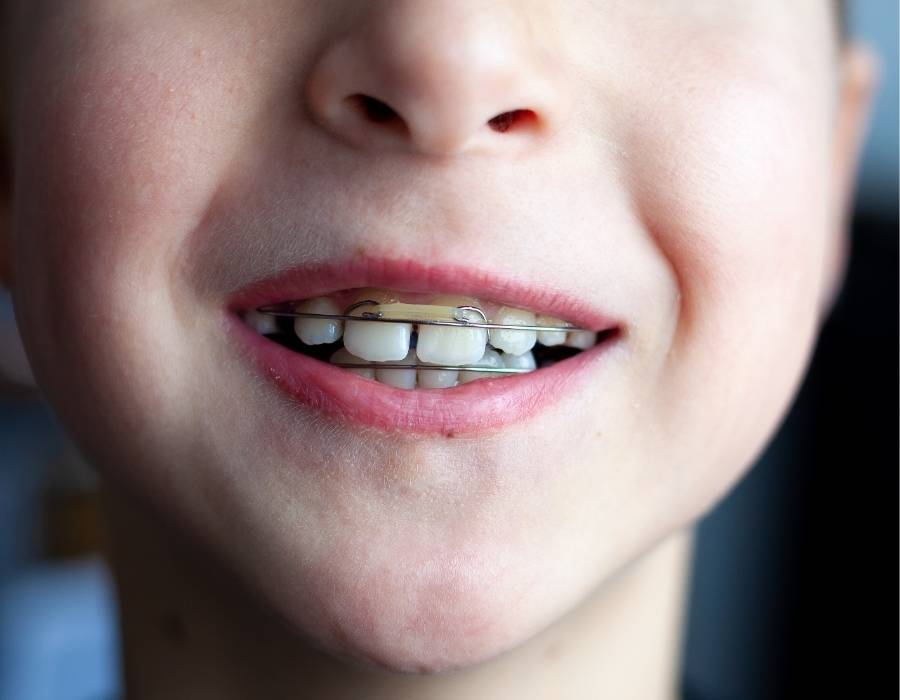
Early treatment is usually considered when waiting could make a specific bite, growth, space, or eruption problem harder to manage. Examples may include certain crossbites, significant jaw-growth differences, severe crowding, or teeth that are erupting in an unusual position. The exact timing depends on the child and the problem being treated. The article When Should My Child See an Orthodontist? provides more information about when an evaluation may be helpful.
What Signs Should Parents Watch for Before or Around Age 7?
Parents do not need to diagnose an orthodontic problem at home, but some changes are worth mentioning during an evaluation.
| What You May Notice | Why It May Be Worth Checking |
|---|---|
| Crowded or overlapping teeth | There may be limited room for permanent teeth |
| Upper and lower teeth do not meet normally | A bite problem may be developing |
| Jaw shifts when the child bites | The bite may not be lining up evenly |
| Baby teeth are lost very early or very late | Permanent tooth eruption may need to be checked |
| Permanent teeth are not coming in as expected | A tooth may be delayed or out of position |
| Difficulty biting or chewing | The way the teeth meet may need evaluation |
If something seems unusual before age 7, parents do not have to wait for a specific birthday to ask for an orthodontic evaluation.
Frequently Asked Questions About Seeing an Orthodontist by Age 7
What Should Parents Do Next?
If your child is approaching age 7, an orthodontic evaluation can help you understand how the teeth and jaws are developing and whether anything needs attention now. If no treatment is needed, the orthodontist may simply recommend monitoring growth and tooth eruption until the timing is right.
If your child is due for an orthodontic evaluation, Miler Orthodontics can check their bite, tooth development, and jaw growth and explain whether treatment is needed now or later. Call the Beaufort office at 843-379-9200, the Bluffton office at 843-815-2521, or use the Miler Orthodontics contact page to schedule an evaluation.