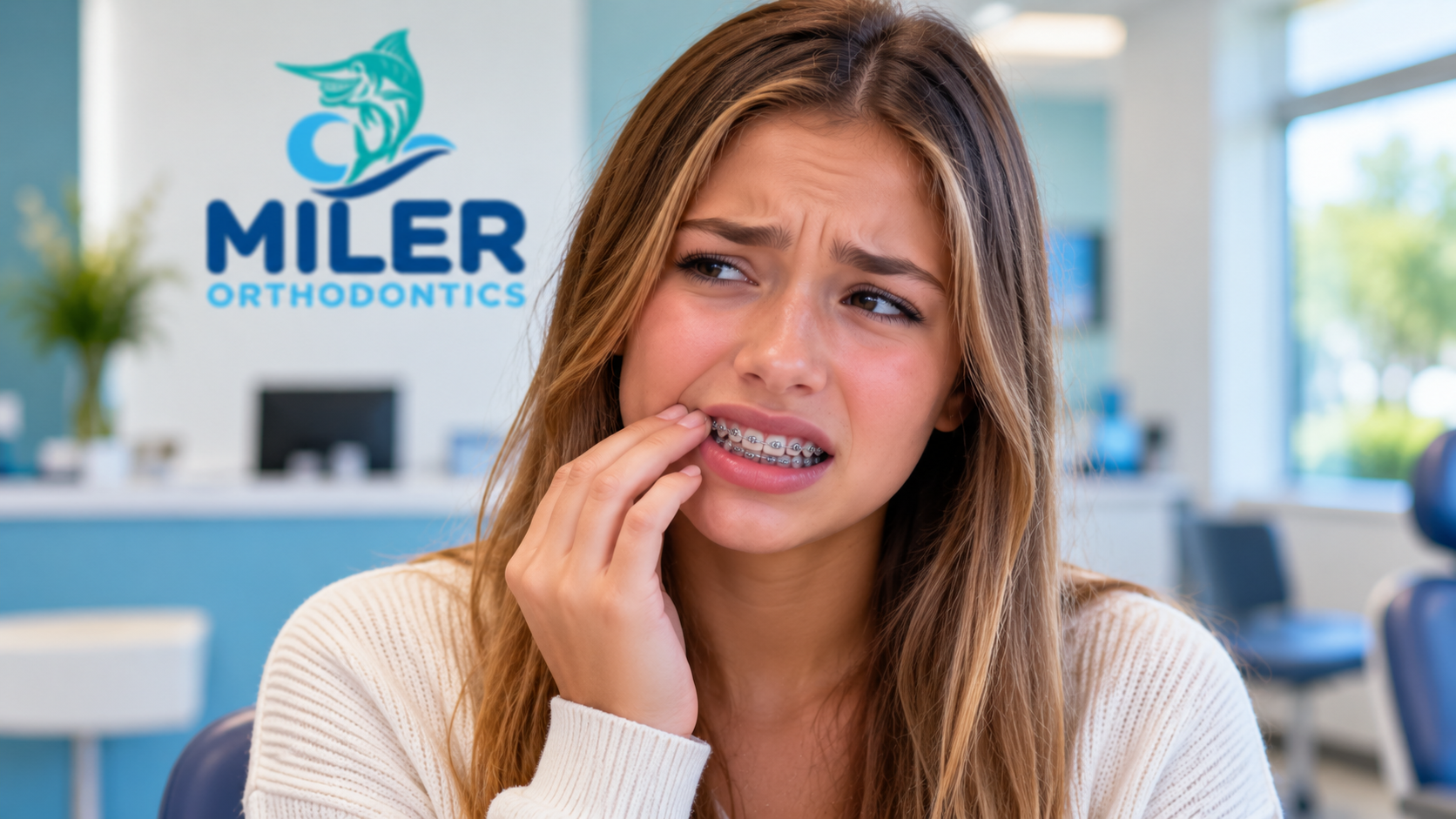
Quick Answer: An orthodontic emergency is a problem with braces or another appliance that causes significant pain, injury, or interferes with treatment. Loose brackets, poking wires, and broken appliances usually mean you should call your orthodontic office. Severe facial trauma, uncontrolled bleeding, or trouble breathing or swallowing requires urgent medical or dental care.
How Do You Know If It Is Really an Orthodontic Emergency?
A loose bracket or poking wire can feel urgent, but it is usually not a medical emergency. These problems still need attention because they can cause irritation or interfere with treatment. More serious problems, such as uncontrolled bleeding, a knocked-out or displaced tooth, severe facial trauma, a suspected jaw injury, or trouble breathing or swallowing, need urgent medical or dental care.
Which Problems Can Usually Wait, and Which Need Urgent Care?
| Situation | Usually Call the Orthodontic Office | Needs Urgent Medical or Dental Care |
|---|---|---|
| Loose bracket | Yes | Usually no |
| Poking wire | Yes | Usually no |
| Broken appliance | Yes | Depends on the injury |
| Heavy bleeding | No | Yes |
| Knocked-out or displaced tooth | No | Yes |
| Suspected jaw injury | No | Yes |
| Trouble breathing or swallowing | No | Yes |
| Severe facial trauma | No | Yes |
If you are unsure how serious the problem is, contact your orthodontic office and explain what happened. If there is uncontrolled bleeding, a serious facial injury, a suspected jaw injury, or trouble breathing or swallowing, seek urgent care first.
What Should You Do If a Bracket Comes Loose?
If a bracket becomes loose, do not pull or twist it. If it is still attached to the wire, leave it in place and contact your orthodontic office for instructions. Orthodontic wax can help if the bracket rubs against your cheek or lip. A loose bracket is usually not a medical emergency, but it should still be reported because it may no longer be working as intended. The guide to common braces issues covers other bracket and wire problems that can happen during treatment.
What Should You Do If a Wire Is Poking Your Cheek?

Cover the sharp area with orthodontic wax if possible and contact your orthodontic office for guidance. Avoid pulling, cutting, or sharply bending the wire unless your orthodontic team gives you specific instructions. If the wire has come completely loose, is causing significant pain, or cannot be covered comfortably, let the office know so they can tell you what to do next.
When Does a Mouth Injury Need Immediate Care?
A hit to the face or mouth can affect braces, teeth, gums, or the jaw. Seek urgent dental or medical care if there is uncontrolled bleeding, a knocked-out or displaced tooth, severe swelling, a suspected jaw injury, or trouble breathing or swallowing. After the immediate injury has been evaluated, the braces or other orthodontic appliance may also need to be checked for damage.
What Should You Do If an Orthodontic Appliance Breaks?
If an expander, retainer, or another appliance breaks or no longer fits correctly, do not force it back into place. Save any loose pieces and contact your orthodontic office so they can determine whether it needs to be adjusted, repaired, or replaced. For patients wearing metal braces, reporting broken brackets or wires promptly may help prevent treatment interruptions.
How Can You Avoid Common Braces Emergencies?
Some problems cannot be prevented, but simple habits can reduce the chance of broken brackets and wires. Avoid chewing ice and very hard foods, follow the instructions for your appliance, wear a mouthguard during contact sports when recommended, and report damaged parts when you notice them. Keeping regular orthodontic appointments also gives the team a chance to identify problems before they become more difficult to manage.
What Can You Safely Do at Home Before Your Appointment?
Orthodontic wax can help cover a sharp wire or loose bracket, and any pieces that come off should be saved. Do not pull on brackets, cut wires without guidance, glue appliances back into place, or try to remove braces yourself. If you are unsure what to do, contact the orthodontic office before attempting a repair.
Frequently Asked Questions About Orthodontic Emergencies
What Should You Do Next?
If a bracket, wire, or appliance breaks, first check for severe bleeding, swelling, breathing problems, or another serious injury. If the problem is not life-threatening, contact your orthodontic office, explain what happened, and follow the instructions you receive instead of trying to repair the appliance yourself.
If you have an orthodontic problem that needs attention, Miler Orthodontics can help determine what to do next. Call the Beaufort office at 843-379-9200, the Bluffton office at 843-815-2521, or use the Miler Orthodontics contact page to get in touch.