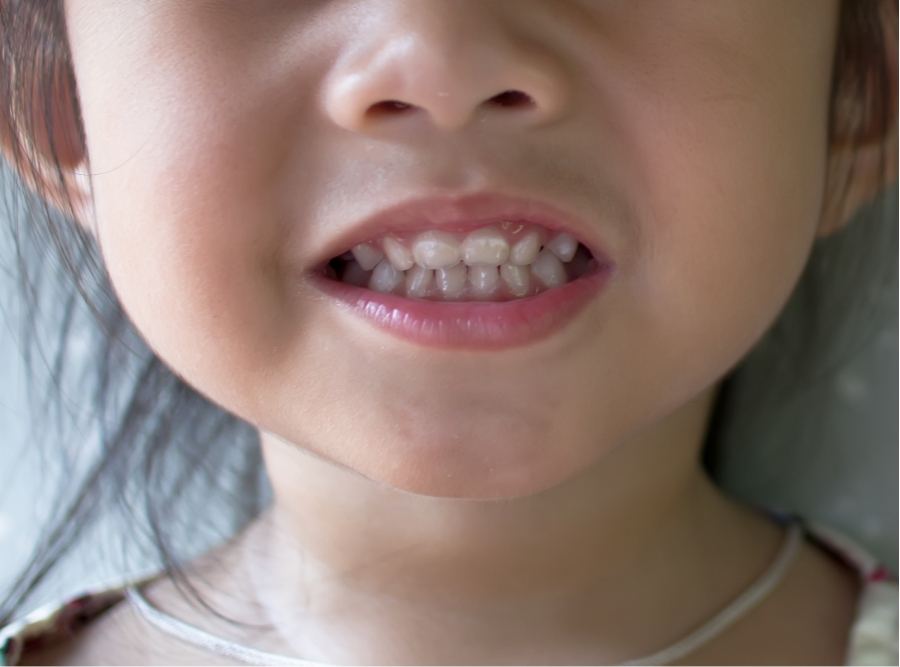
Quick Answer: Occasional mouth breathing during a cold is common. Persistent mouth breathing—especially with regular snoring, restless sleep, difficulty breathing through the nose, or daytime tiredness—should be discussed with a pediatrician. It may also occur alongside narrow dental arches, crowding, and certain bite-development patterns that an orthodontist can evaluate.
When Does Mouth Breathing Become a Concern?
Children may temporarily breathe through their mouths when they have a cold, seasonal allergies, or short-term nasal congestion. The concern is not an occasional open mouth during an illness. It is a recurring pattern that continues when the child is otherwise well, happens frequently during sleep, or appears with ongoing difficulty breathing through the nose.
A child who regularly breathes through the mouth is usually not choosing to do so. The body may be compensating for nasal obstruction, enlarged tonsils or adenoids, allergies, chronic congestion, or another contributing condition. Because breathing is automatic, parents may notice the pattern for months before realizing it deserves attention.
Signs of Mouth Breathing Parents May Miss
Mouth breathing is not always obvious. Some children breathe normally through the nose during the day but sleep with their mouths open. Others show several subtle signs rather than one clear symptom.
Open-Mouth Resting Posture
A child who frequently sits, reads, watches television, or plays with the lips apart may not be using nasal breathing as the usual resting pattern. Open-mouth posture alone does not confirm a breathing problem, but a consistent pattern is worth observing.
Mouth-Open Sleep or Frequent Snoring
Occasional snoring during a cold is common. Frequent snoring, noisy breathing, gasping, restless movement, or consistently sleeping with the mouth open may indicate that the child is having difficulty breathing comfortably during sleep.
Dry Mouth or Chapped Lips
Children who breathe through their mouths overnight may wake with a dry mouth, dry throat, or chapped lips. These symptoms have many possible causes, so they are more meaningful when they occur alongside snoring, nasal obstruction, or mouth-open sleep.
Tiredness, Irritability, or Attention Changes
Mouth breathing during sleep may occur alongside conditions that interfere with sleep quality. Children do not always appear sleepy in the same way adults do. Some become irritable, unusually active, unfocused, or have difficulty with learning and behavior.
Persistent Difficulty Breathing Through the Nose
A child who frequently sounds congested, struggles to breathe through the nose, or cannot comfortably keep the lips closed may have restricted nasal airflow. Persistent symptoms should be discussed with a pediatrician rather than managed through reminders to close the mouth.
Signs That Deserve Prompt Medical Attention
Contact your child’s pediatrician if you notice frequent snoring, labored nighttime breathing, gasping, pauses in breathing, significant daytime sleepiness, attention difficulties, or noticeable behavior changes. These symptoms can occur with pediatric sleep-disordered breathing and should not be evaluated through an orthodontic examination alone.
Seek urgent medical care when a child is visibly struggling to breathe, develops bluish or gray lips or skin, becomes unusually difficult to wake, or has prolonged pauses in breathing.
How Mouth Breathing May Relate to Jaw and Bite Development
Mouth breathing does not automatically cause abnormal facial growth or mean that a child will need orthodontic treatment. The jaws and face develop through a combination of genetics, growth, tooth eruption, oral habits, muscle function, and breathing-related conditions.
During normal resting posture, the tongue often rests against the roof of the mouth while the lips remain comfortably closed. When a child regularly breathes through the mouth, the tongue may sit lower and the lips may remain apart. Over time, these altered muscle and posture patterns may occur alongside differences in dental-arch and jaw development.
Studies have found associations between chronic mouth breathing and patterns such as:
- A narrower upper dental arch
- A high or narrow palate
- Reduced space for permanent teeth
- Crossbites
- Open-bite patterns
- Crowding
- More vertical facial-growth patterns
A child may have one, several, or none of these findings. Research supports an association between mouth breathing and certain craniofacial patterns, but differences in study methods and reliance on observational evidence limit firm conclusions about direct cause and effect.
For example, a tongue that consistently rests low may place different forces on the upper dental arch than a tongue resting against the palate. An orthodontist may consider that pattern alongside genetics, oral habits, tooth eruption, and jaw growth rather than assuming mouth breathing caused the problem by itself.
Orthodontic Patterns That May Appear Alongside Mouth Breathing
Orthodontists do not diagnose sleep disorders, allergies, enlarged tonsils, or the medical cause of mouth breathing. They may, however, identify dental and jaw patterns that warrant closer evaluation or collaboration with another provider.
Crowding
A narrow dental arch may provide less room for permanent teeth to erupt. This can contribute to teeth becoming rotated, overlapping, or blocked from their expected positions.
Narrow Upper Arch
A high or narrow upper arch may appear alongside crowding, crossbite, and breathing concerns. Its presence does not establish why a child is mouth breathing, but it may be relevant to the orthodontic evaluation.
Crossbite
A crossbite occurs when one or more upper teeth sit inside the lower teeth when the child bites down. Some crossbites are associated with differences between the width of the upper and lower dental arches.
Open Bite
An open bite occurs when the upper and lower front teeth do not meet while the back teeth are together. Tongue posture, thumb or finger habits, jaw growth, tooth eruption, and other factors may contribute.
These patterns do not confirm a breathing disorder. They help the orthodontist determine whether the bite is developing normally and whether monitoring or treatment may be appropriate.
What an Orthodontic Evaluation Looks For
An early orthodontic evaluation is not simply a check to see whether a child needs braces. It helps the orthodontist understand how the teeth, dental arches, jaws, and bite are developing.
The evaluation may include an assessment of:
- Upper and lower jaw width and symmetry
- How the jaws and teeth fit together
- Crowding or spacing
- Crossbite or open-bite patterns
- Tooth-eruption progress
- Tongue and lip posture
- Facial growth
- The position of developing or impacted teeth, using dental imaging when clinically indicated
At Miler Orthodontics, the goal is to determine whether the best next step is treatment, observation, or referral to a medical provider. Many children do not need immediate orthodontic treatment and are simply monitored as they grow.
For selected jaw-width or bite problems, growth may provide treatment opportunities that are different after skeletal development is complete. This does not mean that every child benefits from early treatment.
Which Provider Should Parents Contact?
The appropriate provider depends on the symptoms and concerns involved.
A pediatrician is generally the best starting point for persistent mouth breathing, frequent snoring, daytime fatigue, behavior changes, headaches, or general concerns about a child’s health.
An ear, nose, and throat specialist may evaluate enlarged tonsils or adenoids, nasal obstruction, recurring sinus problems, or structural conditions affecting nasal airflow.
An allergist may help when persistent congestion appears to be related to environmental or seasonal allergies.
A sleep specialist may be appropriate when symptoms suggest sleep-disordered breathing or obstructive sleep apnea.
An orthodontist evaluates dental-arch development, tooth eruption, jaw relationships, crowding, crossbites, open bites, and other developing bite concerns.
These providers may work together when a child has both breathing symptoms and orthodontic findings. Orthodontic treatment should not be presented as a substitute for evaluating the medical reason a child is mouth breathing.
What Parents Can Safely Do at Home
Parents do not need to diagnose or correct mouth breathing themselves. The most useful first step is to observe the pattern and record what is happening.
Note whether mouth breathing occurs during the day, at night, or both. Pay attention to snoring, noisy or labored breathing, restless sleep, dry mouth on waking, difficulty breathing through the nose, daytime tiredness, and visible crowding or bite changes.
A short recording of concerning sleep sounds or breathing patterns may help a pediatrician understand what you are observing, provided recording does not delay care when the child appears to be struggling to breathe.
Do not force a child to keep the lips closed or use mouth taping to stop mouth breathing. If nasal airflow is restricted, attempting to hold the mouth closed does not address the underlying cause and may be unsafe.
When Should a Child See an Orthodontist?
An orthodontic evaluation may be useful when mouth breathing appears alongside crowded or overlapping teeth, a narrow upper arch, crossbite, open bite, unusual tooth eruption, difficulty biting or chewing, or noticeable jaw imbalance.
The American Association of Orthodontists recommends that children receive an initial orthodontic evaluation around age seven. At this age, enough permanent teeth have typically emerged for an orthodontist to identify developing bite, eruption, and jaw-growth concerns. Age seven is an evaluation point, not a recommendation that every child begin treatment.
Earlier evaluation may be appropriate when a parent, pediatrician, dentist, or other provider notices a significant concern.
Clear Answers About Your Child’s Growth and Bite
Persistent mouth breathing should not be diagnosed or treated based on appearance alone. When it occurs with regular snoring, difficulty breathing through the nose, restless sleep, daytime symptoms, crowding, or bite changes, the appropriate next step may involve both medical and orthodontic evaluation.
Miler Orthodontics can assess your child’s tooth eruption, dental arches, jaw relationships, and bite development, then explain whether monitoring, orthodontic treatment, or evaluation by another provider may be appropriate. Schedule an early orthodontic consultation to get clear answers about your child’s growth and developing smile.