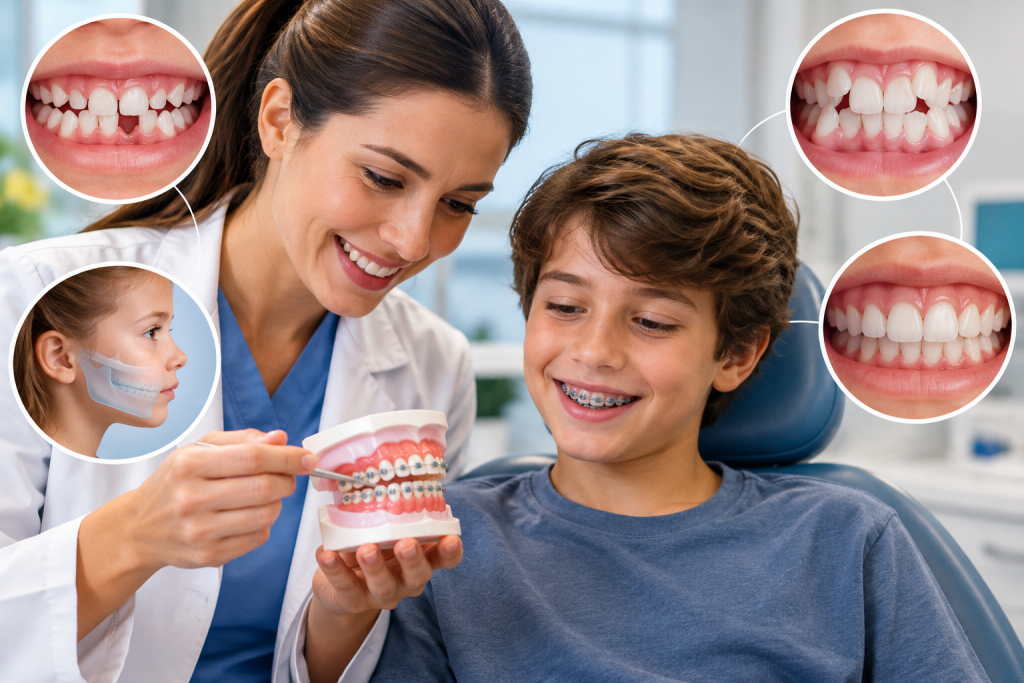
The best age for braces is usually between ages 11 and 14, when most permanent teeth have come in and the jaw is still developing. However, many children benefit from an earlier evaluation around age 7, especially if there are concerns with how the teeth or jaw are developing. The right timing ultimately depends on the individual patient, not just their age.
For many families in Beaufort, the question of when to start braces does not come up in a perfect, planned moment. It often starts with something small, a dentist mentioning crowding, a child’s teeth coming in unevenly, or a parent noticing their smile looks different than expected. From there, the question quickly becomes less about if braces are needed and more about when to start.
In a community shaped by military schedules, school routines, and frequent relocations, that timing decision carries more weight than it might elsewhere. Parents are not just thinking about what is ideal from a clinical standpoint, they are also thinking about how treatment fits into their family’s timeline. Understanding how braces timing actually works in real life can make that decision much clearer.
When Kids in Beaufort Typically Start Braces
While every patient is different, there are clear patterns in when braces tend to begin for families in Beaufort. Most children start treatment sometime during middle school, often between sixth and eighth grade. This timing aligns with when most permanent teeth have erupted and when orthodontic treatment can be completed efficiently while the jaw is still developing.
For students at schools like Beaufort Middle or Battery Creek High, this window often works well because treatment can be completed before major high school milestones. Parents also find that starting during this stage allows braces to fit more naturally into school routines, sports, and extracurricular activities without overlapping with major transitions like college preparation.
That said, not every child follows this exact timeline. Some begin earlier due to specific developmental concerns, while others may start later depending on their needs or family circumstances. The key is understanding what is driving the timing decision rather than trying to match a specific age.
What Actually Determines the Right Timing
The timing of braces is ultimately determined by a combination of tooth development, jaw growth, and how the bite is functioning. In many cases, orthodontists are looking for a stage where they can guide the teeth into place efficiently without fighting against ongoing growth changes.
For example, if a child has significant crowding or teeth coming in out of position, starting treatment too late can limit available space and make correction more complex. On the other hand, starting too early without a clear reason can extend treatment unnecessarily. Finding the balance requires evaluating how the teeth are erupting, how the upper and lower jaws align, and whether any early intervention could simplify future treatment.
In Beaufort, this evaluation often happens earlier than parents expect. Many children are referred by their general dentist around age 7 or 8, not because they need braces immediately, but because it allows orthodontists to monitor development and identify the right moment to begin.
Different Scenarios That Affect Timing
One of the reasons there is no single “best age” is that patients fall into very different situations, each with its own timing considerations. Looking at these scenarios can make the decision more practical and less abstract.
For younger children, early treatment may be recommended if there are issues with jaw development, crossbites, or severe crowding. In these cases, addressing the problem early can prevent more complicated treatment later. For many families, this phase is about creating the right conditions for permanent teeth to come in properly rather than completing full orthodontic treatment.
For pre-teens and teenagers, braces are often started once most permanent teeth are in place. This is the most common scenario and typically allows for efficient treatment that addresses both alignment and bite. It is also the stage where braces can be completed in a predictable timeframe, which is important for families planning around school and activities.
For older teens or even adults, treatment may begin later due to delayed decisions, relocations, or relapse from previous orthodontic care. In Beaufort, where military families frequently move, it is not uncommon to see patients continuing or restarting treatment after transferring from another provider.
When Timing Becomes More Urgent
While many orthodontic decisions can be made gradually, there are certain situations where timing becomes more important. For example, if a child is experiencing difficulty chewing, jaw discomfort, or teeth erupting in the wrong position, delaying treatment can make the problem more difficult to correct.
Severe crowding is another situation where early action can be beneficial. When there is not enough space for permanent teeth, waiting too long can lead to impacted teeth or the need for extractions. Bite issues such as deep bites or crossbites can also become more pronounced over time, making early evaluation an important step.
These are the kinds of cases where parents often move from “we’re thinking about it” to “we should have this looked at soon.” Recognizing that shift can help avoid unnecessary complications later.
A Common Pattern We See in Beaufort Families
One pattern that stands out in Beaufort is how often orthodontic timing is influenced by life circumstances rather than just clinical need. Military families, in particular, often have to plan around potential relocations, which can affect when treatment begins or how it is managed.
In many cases, families choose to start braces at a point where they expect to remain in the area long enough to complete a significant portion of treatment. Others may begin with a clear plan for transferring care if needed. This adds an additional layer to the timing decision that is unique to communities with a strong military presence.
Even for non-military families, scheduling plays a role. Parents often aim to start treatment during a period when routines are more stable, such as the beginning of a school year or over the summer. These practical considerations are an important part of making orthodontic care manageable.
What Should You Do as a Parent?
With so many variables, the decision can feel complicated, but it becomes much simpler when broken into a few clear steps. If your child is under age 10 and you have not had an orthodontic evaluation yet, scheduling one is a smart first move. This does not mean treatment will begin right away, but it provides a clear understanding of what to expect.
If your child is between 11 and 14, they are likely within the most common treatment window, especially if most permanent teeth have come in. At this stage, orthodontic care can often be completed efficiently, making it a practical time to begin.
If you are unsure at any age, the most valuable step is simply getting a professional evaluation. This removes guesswork and replaces it with a clear, personalized plan based on your child’s development.
If you are at that point of uncertainty, scheduling an orthodontic evaluation can provide answers without committing to treatment. It is often the easiest way to move forward with confidence.
What to Expect at the First Visit
For many families, hesitation comes from not knowing what the first visit will involve. In reality, the process is straightforward and focused on providing information rather than pressure. The appointment typically includes an examination of the teeth and bite, along with digital scans or X-rays if needed.
The orthodontist will then explain what they see, whether treatment is recommended, and the best timing based on the child’s development. In many cases, families leave with a clear understanding of next steps, even if treatment is not needed immediately. This makes the initial visit a low-pressure way to get clarity.
Why Beaufort Families Choose Miler Orthodontics
In Beaufort, families often rely on recommendations from neighbors, school networks, and military communities when choosing healthcare providers. Orthodontic care is a long-term process, and trust plays a significant role in that decision.
At Miler Orthodontics, care is built around understanding both the clinical and practical needs of patients. From early evaluations to full treatment, each plan is designed to fit the patient’s development as well as their daily routine. The practice is also experienced in working with military families, including coordinating care and managing transitions when needed.
This combination of expertise and local understanding helps ensure that treatment is not only effective, but also manageable within the realities of life in Beaufort.
Frequently Asked Questions About Braces Timing
Will my child need two-phase orthodontic treatment in Beaufort?
Two-phase treatment is recommended only when early intervention can guide jaw development or prevent more complex issues later. Phase 1 typically occurs between ages 7–10 and focuses on structural concerns, while Phase 2 (ages 11–14) aligns the teeth once permanent teeth are in place. Many children in Beaufort only need one phase during their teen years. The decision depends on your child’s development, not a standard timeline.
What is the best age for braces for kids in Beaufort, SC?
The most common age for braces in Beaufort is between 11 and 14, when most permanent teeth have erupted and the jaw is still developing. This allows orthodontists to correct alignment and bite issues more efficiently. However, children are often evaluated as early as age 7 to monitor growth and identify potential concerns early. The right timing depends on your child’s specific development, not just their age.
What if we move during braces treatment in Beaufort?
This is a common concern for military families in Beaufort, especially those connected to Parris Island. Orthodontic treatment can be coordinated between providers, and records can be transferred if relocation occurs. Many practices, including Miler Orthodontics, are experienced in managing transitions to ensure continuity of care. Planning ahead makes the process smoother and reduces disruption.
When Should Your Child Start Braces? Start Here
If you’re trying to decide when your child should start braces, the best next step is scheduling an orthodontic evaluation. This allows you to understand your child’s development, your timing options, and what to expect moving forward.
At Miler Orthodontics, you’ll receive clear guidance based on your child’s needs and your family’s situation, so you can move forward with confidence.