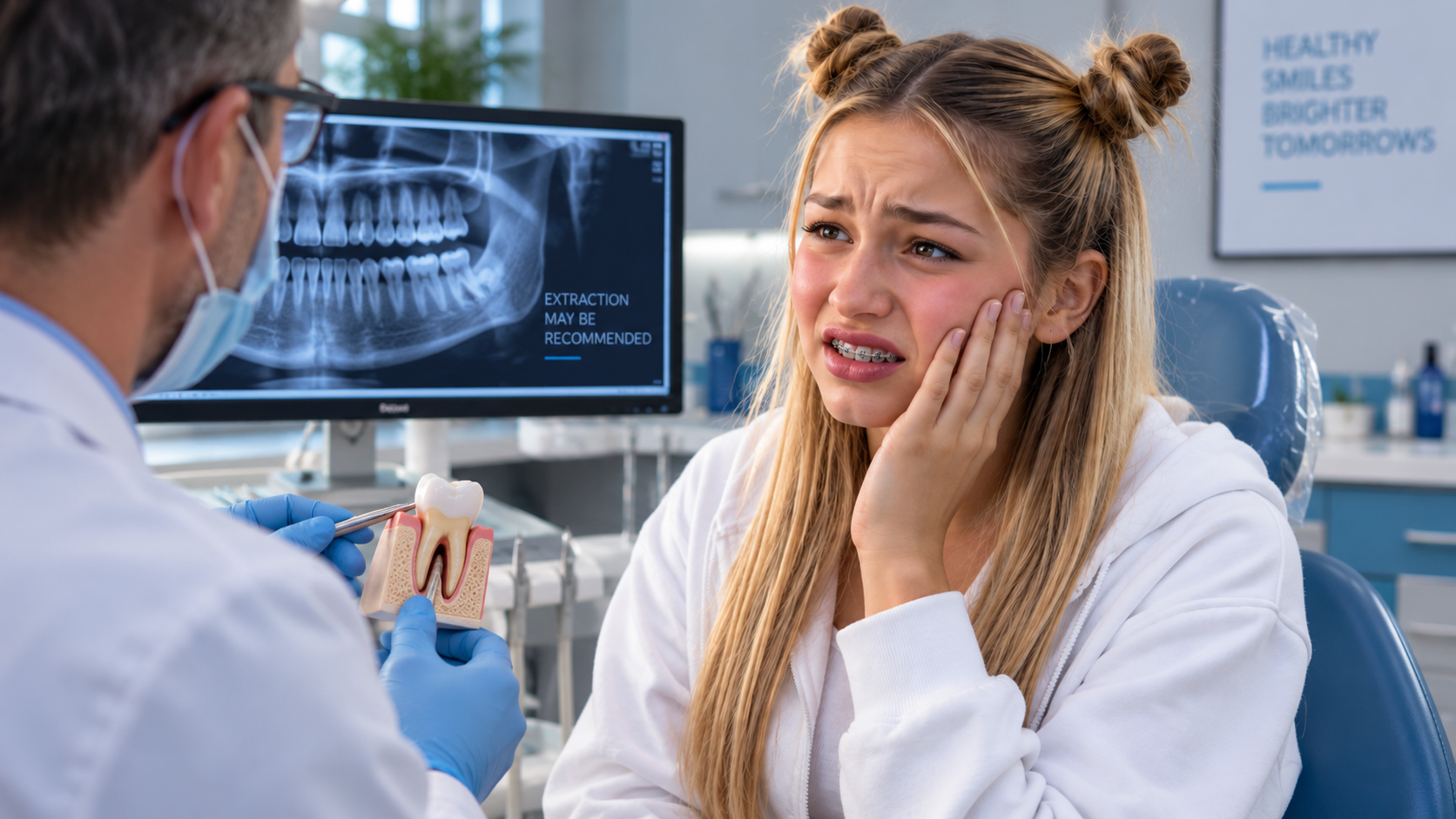
Quick Answer: You may not need teeth removed for braces. Extractions are sometimes recommended when there is not enough room to straighten the teeth or correct the bite without moving teeth too far forward or outside healthy bone. Depending on your crowding, bite, age, and tooth position, an orthodontist may also consider options such as expansion, interproximal reduction, or other ways of creating space.
Why Might Braces Need More Space?
Braces move teeth, but those teeth need enough room to move into healthier positions. If your mouth is crowded, your bite needs correction, or your front teeth already sit far forward, there may not be enough space to align everything safely. For example, if several teeth overlap because the dental arch is crowded, simply pushing them outward may not be the best option. The orthodontist first needs to determine how much space is needed and where that space can safely come from.
If crowding is the main concern, the guide to braces for crowded teeth explains how alignment problems can affect treatment planning.
How Does an Orthodontist Decide If Teeth Need to Be Removed?
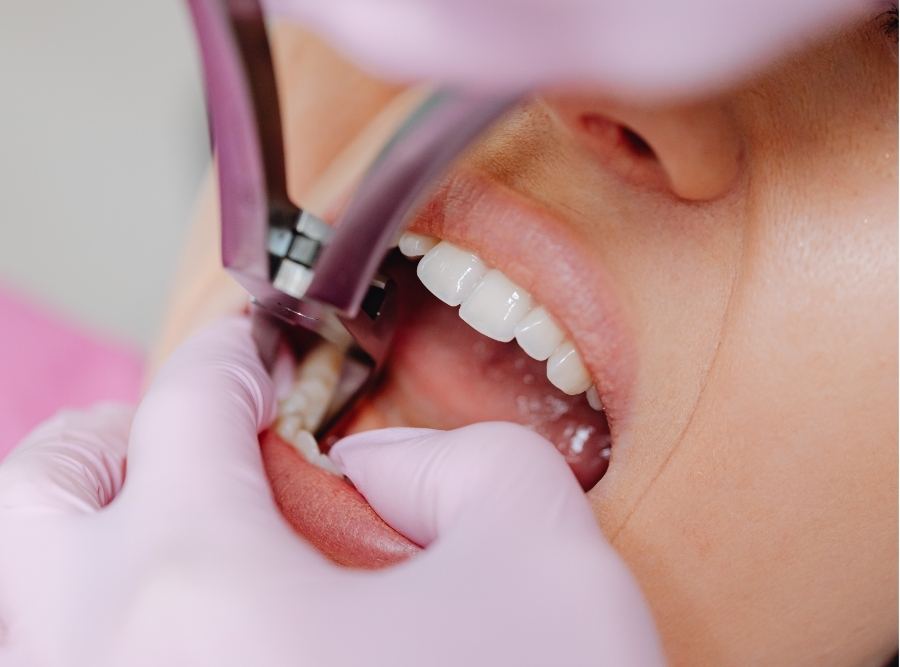
Crowding is only one part of the decision. An orthodontist also looks at your bite, tooth position, jaw shape, gum and bone support, facial profile, and whether you are still growing. Two patients may both have crowded front teeth, but one may have enough room to create space without extraction while the other would require the teeth to be moved too far outward.
For younger patients, growth can also affect which options are available. Early orthodontic treatment may help address certain developing bite or space problems while the jaws are still growing.
What Factors Affect the Extraction Decision?
| Factor | Non-Extraction Treatment May Be Possible When | Extraction May Be Considered When |
|---|---|---|
| Crowding | The lack of space is limited | There is a larger space shortage |
| Tooth position | Teeth can move while staying within healthy bone | Teeth would need to move too far outward |
| Bite | The bite can be corrected with available space | More room is needed to correct the bite |
| Growth | Remaining growth may help with treatment | Little or no useful growth remains |
| Facial profile | Tooth movement can maintain facial balance | More control of front-tooth position is needed |
No single factor automatically means teeth need to be removed. The orthodontist looks at how these factors work together before deciding whether extraction or a non-extraction approach makes more sense.
What Are the Alternatives to Removing Teeth for Braces?
There are several ways an orthodontist may create space without removing permanent teeth. Each option works differently, and each has limits.
| Option | What It Does | Example of When It May Be Used |
|---|---|---|
| Interproximal reduction (IPR) | Creates a small amount of room between selected teeth | Mild crowding where only limited space is needed |
| Expansion | Creates more width in part of the dental arch | A growing patient with a narrow upper arch |
| Distalization | Moves certain back teeth farther toward the rear of the mouth | A bite where enough room exists behind the teeth |
| Planned tooth movement | Uses available space more efficiently | Mild crowding that can be corrected with braces or aligners |
For example, a patient who needs only a small amount of extra room may be able to use IPR instead of removing a tooth. A growing child with a narrow upper jaw may be considered for expansion. These methods can help in the right cases, but they cannot create unlimited space.
When Might Tooth Extraction Still Be Recommended?
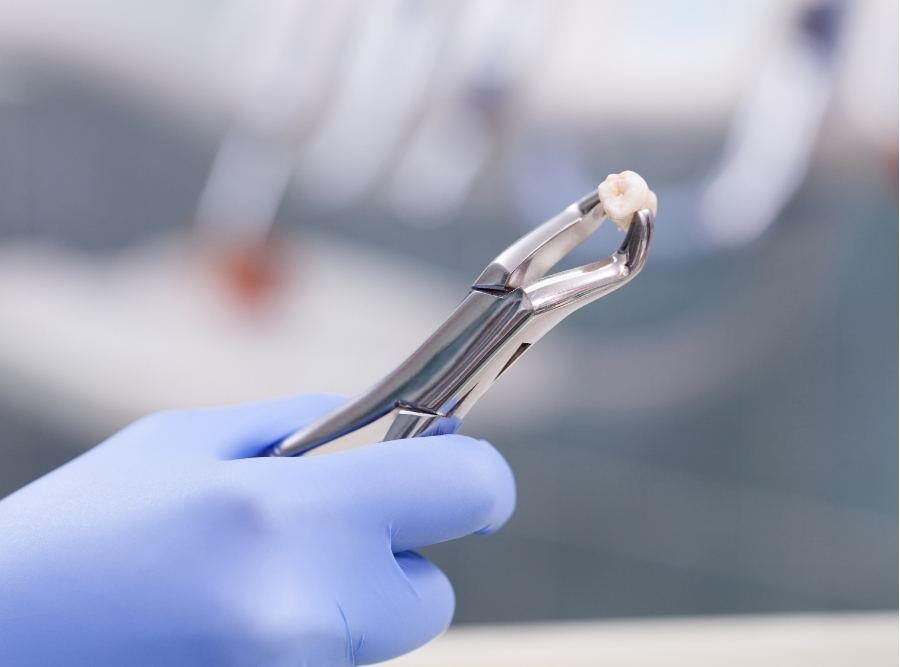
Extraction may be considered when the amount of crowding or bite correction requires more space than other methods can safely provide. It may also be considered if keeping every tooth would require some teeth to be moved too far outside their supporting bone or too far forward. In those cases, removing selected teeth can create the room needed to position the remaining teeth more appropriately.
For patients planning treatment with metal braces, the decision about extractions should be part of the complete orthodontic treatment plan rather than treated as a separate issue.
Will Having Teeth Removed for Braces Change Your Face?
Orthodontic treatment can change the position of the teeth and lips, but extraction alone does not determine how your face will look afterward. The result depends on your starting facial structure, which teeth are removed, how much the other teeth are moved, and the overall treatment plan. For example, a patient whose front teeth already sit far forward may have different treatment goals from someone whose profile is flatter.
What Happens If Teeth Need to Be Removed Before Braces?
If extraction is part of your treatment plan, the orthodontist usually coordinates with a dentist or oral surgeon to decide when the teeth should be removed. Braces may be placed before or after the extraction depending on the case. Healing time also varies, so your dentist and orthodontist should give you instructions based on the teeth being removed and your treatment plan.
If your concern is specifically about third molars, the article on wisdom teeth before braces explains when wisdom teeth may or may not affect orthodontic treatment.
What Should You Ask Before Agreeing to an Extraction?
If teeth are recommended for removal, ask why the space is needed, which teeth would be removed, what non-extraction options were considered, and what the tradeoffs are. You can also ask what might happen if a non-extraction plan is used instead. In some cases, another approach may work. In others, it may not provide enough room to correct the bite or move the teeth safely.
Frequently Asked Questions About Teeth Removed for Braces
What Should You Do Next?
If an orthodontist recommends removing teeth before braces, ask what problem the extraction is meant to solve and what alternatives were considered. Understanding your crowding, bite, available space, tooth position, and treatment goals can make it easier to compare your options and make an informed decision.
If you have been told you may need teeth removed before orthodontic treatment, Miler Orthodontics can evaluate your teeth and bite and explain the treatment options that may apply to your case. Call the Beaufort office at 843-379-9200, the Bluffton office at 843-815-2521, or use the Miler Orthodontics contact page to schedule an orthodontic evaluation.