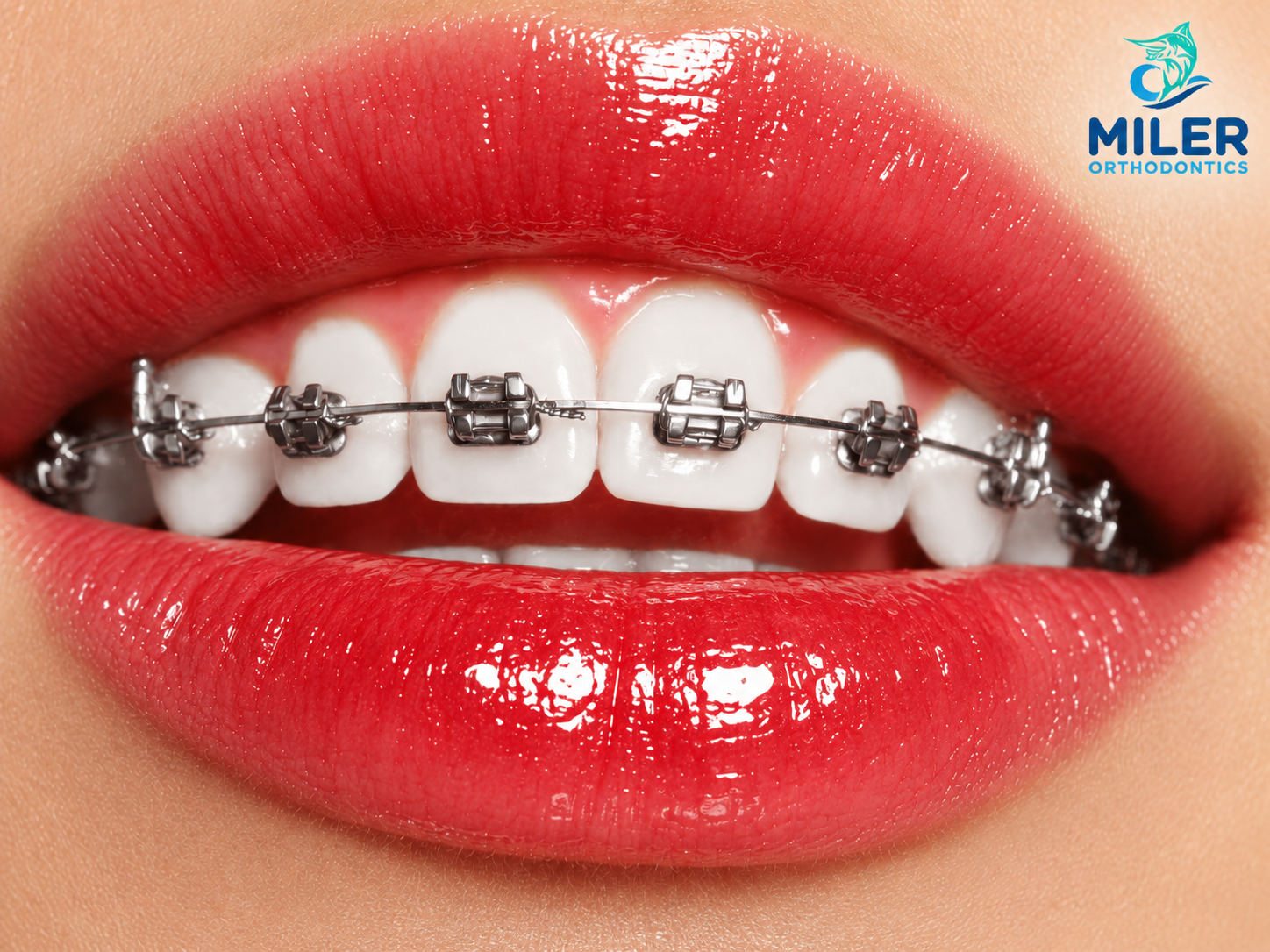
Quick Answer: Traditional braces can be an option for adults who need to correct crowding, spacing, crooked teeth, or bite problems. Age alone does not determine whether braces are appropriate. An orthodontist will also consider the health of your teeth and gums, existing dental work, the type of tooth movement needed, and whether fixed braces or another treatment option better fits your case.
Can Adults Get Traditional Braces at Any Age?
There is no single age when someone becomes too old for orthodontic treatment. Adults considering adult orthodontics are evaluated based on tooth position, bite, gum health, supporting bone, and previous dental work. These factors help determine whether braces are appropriate and how treatment should be planned.
What Problems Can Traditional Braces Correct?
Traditional metal braces use brackets and wires to guide teeth through planned movements. Depending on the individual case, braces may be used to address crowding, spacing, crooked teeth, protruding teeth, overbites, underbites, crossbites, and other alignment concerns. The treatment plan depends on which teeth need to move and whether the bite also needs correction.
When Might Traditional Braces Make More Sense Than Clear Aligners?

Traditional braces may make sense when an orthodontist wants continuous control over tooth movement or when a patient prefers a fixed appliance that stays in place throughout treatment. Clear aligners may be another option for some adults, but the better choice depends on the orthodontic problem, oral health, treatment goals, and how each appliance fits into daily life.
| Consideration | Traditional Braces | Clear Aligners |
|---|---|---|
| Appliance type | Fixed to the teeth | Removable |
| Visibility | More noticeable | More discreet |
| Daily responsibility | Remain in place throughout treatment | Must be worn as directed |
| Eating | Some foods may need to be avoided | Removed for meals |
| Cleaning | Requires cleaning around brackets and wires | Removed for brushing and flossing |
| Best option | Depends on the individual case | Depends on the individual case |
Adults comparing the two approaches can also review aligners vs. braces for a broader explanation of how the treatment options differ.
How Is Adult Braces Treatment Different From Teen Treatment?
The basic process of moving teeth is similar for adults and teens, but adults often have more dental history to consider. Crowns, fillings, missing teeth, gum concerns, tooth wear, or previous orthodontic treatment may affect how the plan is designed. An adult orthodontic evaluation therefore looks closely at existing dental work and the condition of the teeth and gums before active treatment begins.
Can You Get Braces With Crowns, Fillings, Implants, or Missing Teeth?
Existing dental work does not automatically prevent an adult from having braces, but it can affect treatment planning. Crowns and fillings need to be considered when planning bracket placement and tooth movement, while dental implants remain fixed rather than moving like natural teeth. Missing teeth can also affect how space is managed, so the orthodontist may plan treatment around existing restorations or future dental work.
What Should Adults Consider Before Choosing Traditional Braces?
Adults should think about how a fixed appliance will fit into their daily routine before starting treatment. Traditional braces require careful cleaning around brackets and wires, and some foods may need to be limited to help protect the appliances. Existing crowns, implants, bridges, or missing teeth may also affect treatment planning. Appearance is another consideration because metal braces are more noticeable than clear aligners, although braces stay in place and do not require patients to remember to put them back in throughout the day.
How Do You Keep Your Teeth Clean With Braces?
Braces create additional areas where food and plaque can collect, so careful daily cleaning becomes especially important. Patients should follow their orthodontic team’s instructions for brushing around brackets and wires, cleaning between the teeth, and maintaining regular dental checkups. Good oral hygiene helps protect the teeth and gums throughout orthodontic treatment.
What Happens After Adult Braces Are Removed?

Orthodontic treatment does not end the day the braces come off. Teeth can shift after active treatment, so retainers are commonly used to help maintain the new tooth positions. The orthodontist will recommend a retention plan based on the patient’s treatment and long-term needs.
What Should You Ask at an Adult Braces Consultation?
Before starting treatment, ask what problems the braces are intended to correct, how existing dental work may affect the plan, and whether another orthodontic option should also be considered. It is also useful to discuss daily cleaning, food restrictions, retention after treatment, and the factors that may affect the overall treatment plan.
Frequently Asked Questions About Traditional Braces for Adults
Considering Traditional Braces as an Adult?
If you are considering braces and want to understand which treatment may fit your teeth, bite, and existing dental work, contact Miler Orthodontics for an orthodontic evaluation. Call the Bluffton office at 843-815-2521 or the Beaufort office at 843-379-9200, or use the contact form to request a consultation.